Company
Beijing Superlaser Technology Co.,Ltd.
Tel
Products
-
Diode Laser Hair Removal Machine
-
Fiber Laser Hair Removal Machine
-
Fractional CO2 Laser Therapy Machine
-
1927nm Thulium Laser
-
HIFU Wrinkle Removal Machine
-
Q-switch ND YAG laser
-
IPL Machine/PDT Beauty Machine
-
1064 Long Pulse Laser
-
Picosecond Laser
-
Electromagnetic Slim Machine
-
Lipo Laser Slimming Machine
-
Cryolipolysis Body Slimming
-
Vital Injector Mesotherapy Gun
-
Multifunction Skin Care
-
Spare Parts
-
Related Products
808nm Diode Laser Hair Removal Machines Ice Laser Tech FDA & medical CE certificate Medical Laser Device
Brand Name: Boslaser
OEM/ODM: Design on Logo/Appearance/Software/Hardware...
Suitable for: Hospital,Skin Care Center,Beauty Salon...
We're Here to Help :
Easy Ways to Get Answers You Need. 808nm diode laser is one of the main products of Beijing Superlaser Technology Co., Ltd. with good Price. Our company is a professional supplier and manufacturers China, Welcome to buy the best customized system equipment and machines.
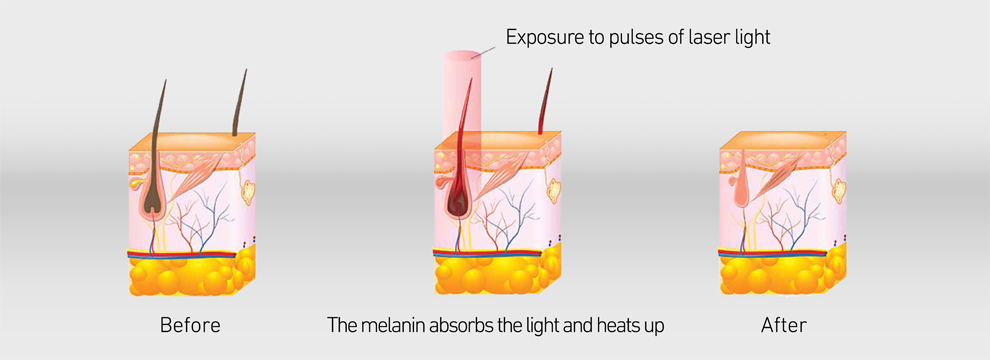

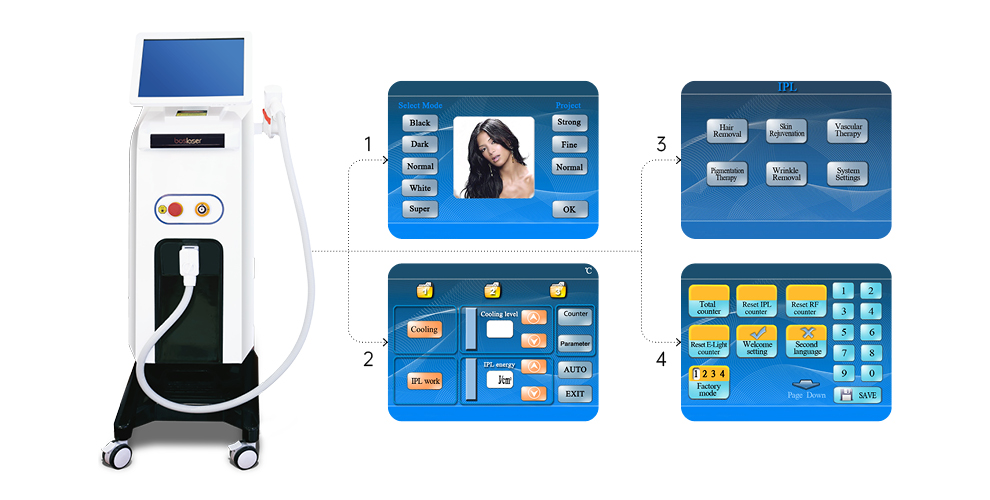
Modle HR10 diode laser hair removal machine has medical CE and FDA certificate medical laser device. 808nm wavelength is the Gold standard for hair removal. This machine uses the selective absorption of light to achieve the purpose of hair removal. Because the hair follicles and hair shafts are rich in melanin, The light emitted by the 808nm laser of this machine uses melanin as the target, Melanin absorbs light with a wavelength of 808nm and converts it into heat energy. The temperature of the hair follicle tissue rises sharply, leading to the destruction of hair follicle stem cells, thus achieving the purpose of removing hair.
808nm diode laser is one of the main products of Beijing Superlaser Technology Co., Ltd. with good Price. Our company is a professional supplier and manufacturers China, Welcome to buy the best customized system equipment and machines.


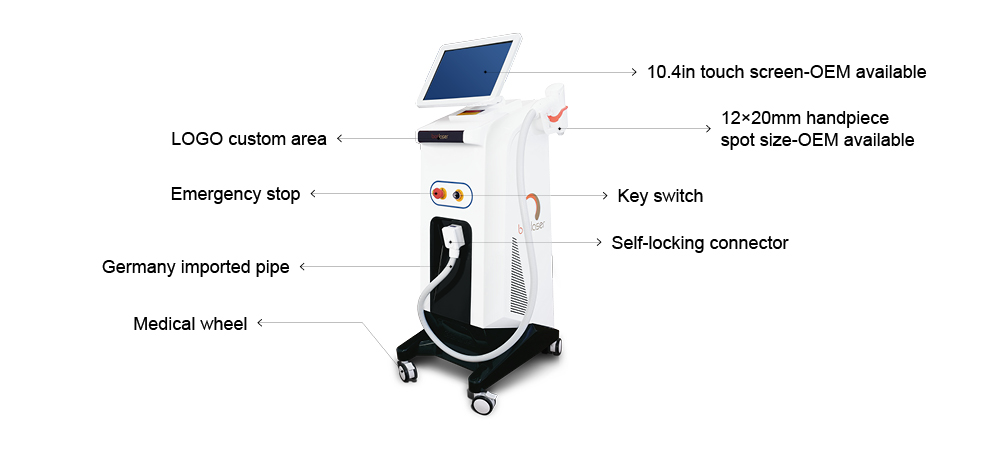
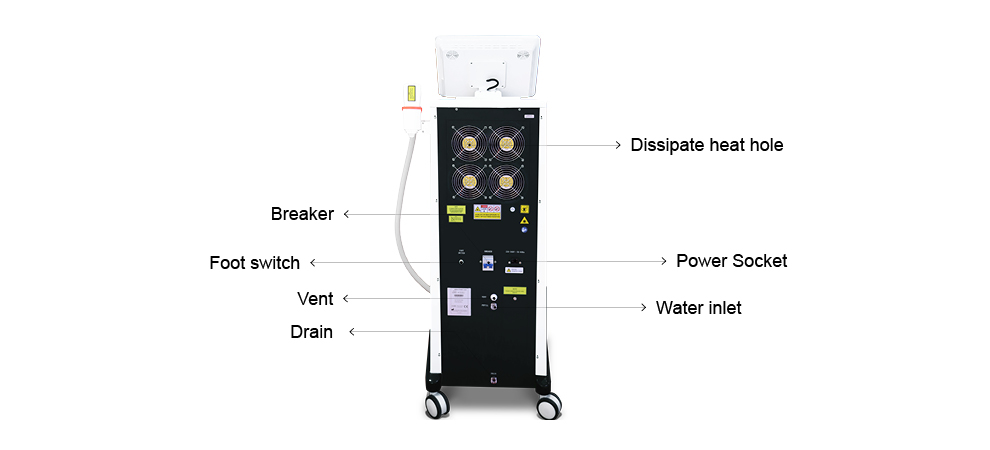


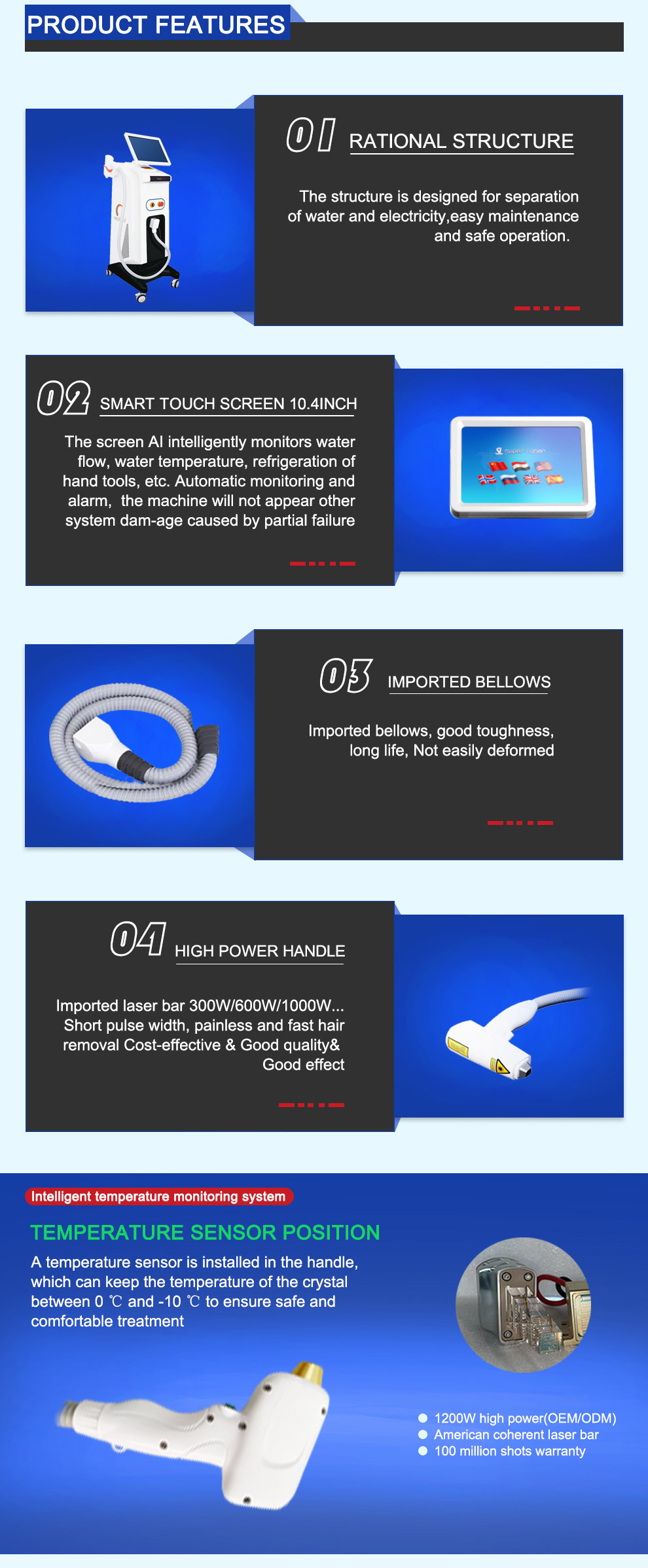
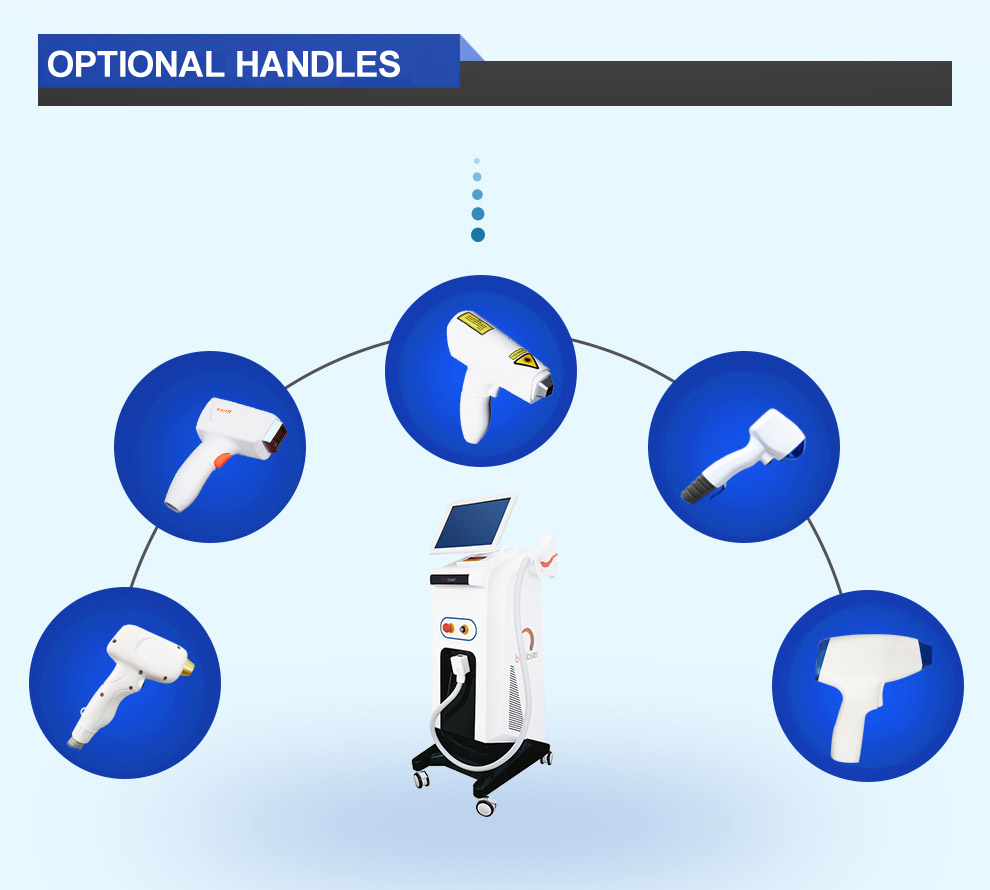
This medical laser device laser hair removal machines handle has a high power : 300W/600W/1000W/1200W...which support OEM and ODM, and the laser bar is imported from U.S. , it is cost-effective and higher quality. The laser hair removal machine' handle also has intelligent temperaturer monitoring system, the tempertature sensor is installed in the handle which can keep the temperature of the Sapphire contact cooling system between 0°C and -4°C to ensure safe and comfortable treatment.
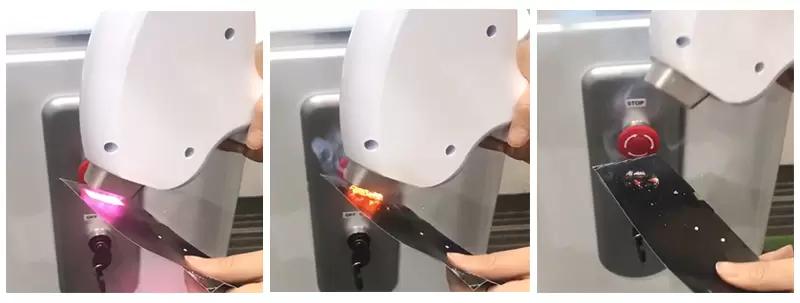
Energy Test

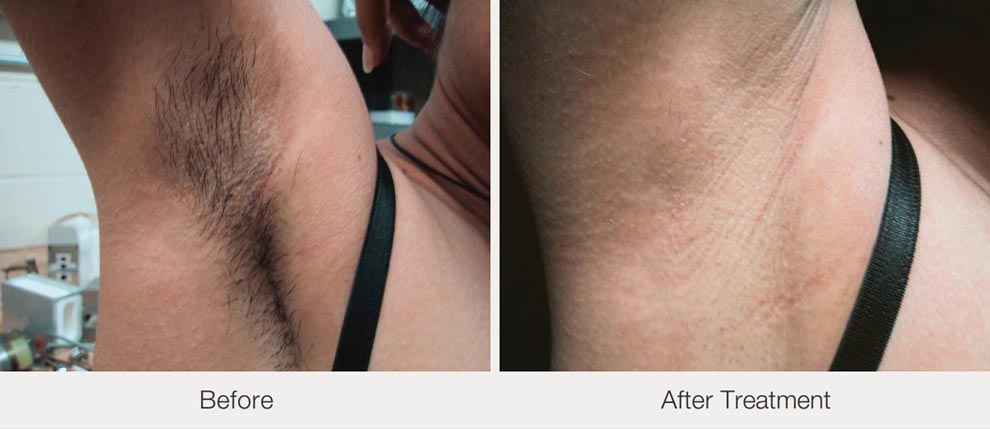
1. Hair Removal, laser epilation, Skin Tightening;
2. Widely used for any color hair;
3. Widely used for any skin type;
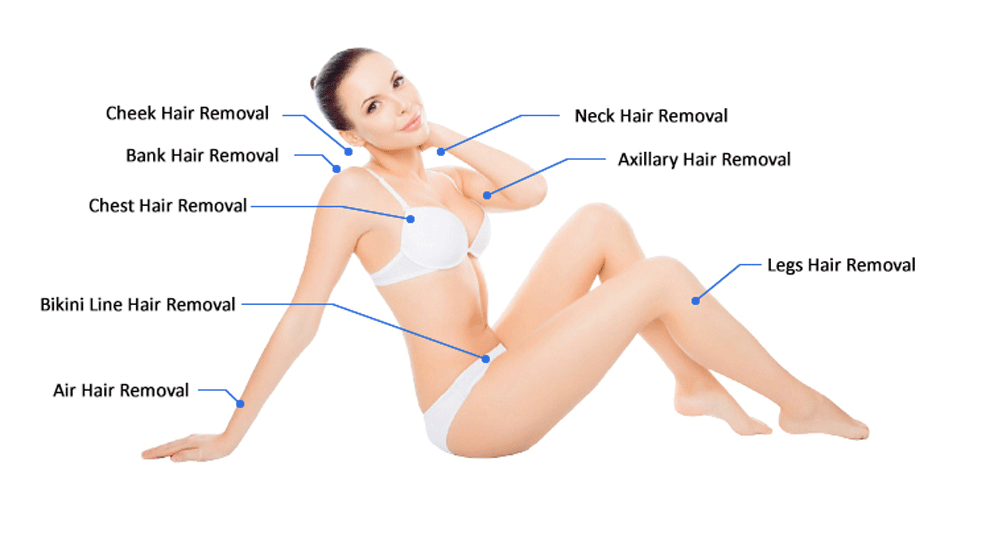
4. Removel Area: Lip Hair, Beard, Chest Hair, Armpit Hair, Back Hair, Arm Hair, Leg Hair, Unwanted Hair outside the Bikini Line.


1.Stable high output power diode laser bars.
2.More than 20,000,000 shots ensure longer life time than other hair removal machine.
3.Strong Sapphire contact cooling system laser hair removal machines
4.Excellent treatment result can be expected at the first treatment and suitable to all types of hair
5.Safety: Normal skin tissue absorbs less 808NM laser light, and hair follicles absorb more melanin, ensuring that all energy is applied to hair follicles. At the same time, the skin tissue around the hair follicle is intact.
6.Comfort: The TEC constant temperature refrigeration system ensures that the sapphire light outlet is kept at a constant temperature of -4°C to achieve painless hair removal.
7.Fast: 12*10CM super large spot + 10HZ light frequency greatly improves the treatment speed and saves treatment time.
8.Curative effect: The high energy density output of the coherent imported laser ensures that the laser energy acting on the hair is stronger and the effect is better.

|
Light Source |
Diode Array with collimator Lens |
Screen |
10.4 inch true color touch screen LCD |
|
Modes |
Single Pulse |
Window Spot Size |
12 x 10mm = 1.2cm2 |
|
Wavelength |
808nm |
Pulse Repetition |
Up to 20 pulses per second |
|
Output Energy |
Up to 120J/cm2 |
Tip Cooling |
Sapphire Peltier contact cooling |
|
Power requirement |
110V 60 Hz or 230V 50Hz |
System Cooling |
Compressor closed circuit water chiller with integrated heat exchanger.Inner distilled water circulation cooling system & air cool- ing ( maximum water pressure: 0.3MPa ) |
|
Rated Power |
1500VA |
||
|
Temperature |
20°C—25°C |
Dimensions |
598L x 440W x 1093H |
|
Relative humidity |
≤70% |
Laser Class |
Class 4 Laser Product |
|
Pressure |
860—1060hpa |
Weight |
60 kilogram |
What tests do FDA-approved commercial laser hair removal cosmetic devices need to go through?
FDA-approved commercial laser hair removal cosmetic devices (generally classified as Class II medical devices) need to go through a series of tests and evaluations to ensure their safety and effectiveness in compliance with the FDA's 510(k) premarket notification requirements. The following is an overview of the specific tests and evaluations:
1. Safety testing
-Laser output parameter testing:
Verify that the laser's wavelength (such as 755nm, 808nm or 1064nm), energy density, pulse duration, and power output are within a safe range to prevent burns, scars, or other skin damage.
Test the uniformity and stability of the laser beam to ensure consistent energy distribution in the treatment area.
-Skin thermal effect evaluation:
Detect the thermal effect of the device on different skin types (Fitzpatrick skin type IVI) to ensure that excessive thermal damage is not caused.
Evaluate whether the cooling system (such as contact cooling or air cooling) can effectively protect the epidermis and reduce the risk of burns.
-Electrical safety:
Comply with international standards (such as IEC 606011) to test the electrical insulation, grounding and leakage risks of the equipment to prevent electric shock or equipment failure.
-Biocompatibility testing:
Parts of the equipment that come into contact with the skin (such as the handle or lens) must pass the biocompatibility test of the ISO 10993 standard to ensure that they do not cause allergies, irritation or other adverse reactions.
-Eye safety:
Laser hair removal equipment must comply with laser safety standards (such as ANSI Z136 or IEC 60825) to test whether adequate eye protection measures (such as protective glasses requirements) are provided to prevent laser damage to the eyes of operators or patients.
2. Effectiveness testing
-Clinical trials or performance data:
Manufacturers need to provide clinical trial data to prove the hair removal effect of the device on different skin and hair types (such as the percentage of hair reduction, the number of treatments and long-term effects).
The data must show that the device can effectively target melanin in hair follicles, destroying the ability of hair to grow without damaging surrounding tissues.
-Performance consistency test:
Test the performance stability of the device under different settings (such as energy level, pulse mode) to ensure that the treatment effect is repeatable and in line with expectations.
Verify the accuracy of the dot matrix or scanning mode (if applicable) to ensure uniform coverage of the treatment area.
3. Equipment design and technical testing
-Laser system calibration:
Test the calibration accuracy of the laser to ensure that the output parameters are consistent with the device display or settings.
Verify the reliability of the control system, such as energy regulation, pulse control, and treatment area selection.
-Durability and reliability test:
Test the stability of the device under long-term use, including laser life, cooling system durability, and overall hardware reliability.
Simulate high-intensity use scenarios to evaluate whether the device can maintain performance without failure.
-Environmental adaptability:
Test the performance of the device under different environmental conditions (such as temperature and humidity) to ensure stable operation in a typical use environment.
4. Label and Instructions Verification
-Label compliance:
FDA reviews device labels, user manuals, and marketing materials to ensure that the applicable population (such as skin type), contraindications (such as pregnant women, patients with certain skin diseases), potential risks, and correct operation methods are clearly stated.
Prevent unapproved efficacy claims (such as claims for permanent hair removal, which must be clearly stated as "long-term hair reduction").
-Operational safety:
Verify whether the device provides clear operating instructions and safety warnings, such as skin testing, energy setting recommendations, and treatment interval instructions.
Check whether operator training requirements are included to ensure that only qualified personnel use the device.
5. Manufacturing quality testing
-Manufacturers must comply with FDA's Quality System Regulations (21 CFR Part 820), including:
Production consistency: Test the consistency of device performance between production batches to ensure that each device meets the design specifications.
-Traceability: Verify production and quality control records to ensure that the device can be traced back to raw materials and manufacturing processes.
-Packaging and storage testing: Ensure that the device is not damaged during transportation and storage and maintains stable performance.
6. Risk Analysis and Mitigation Measures
-Risk Management Report:
Manufacturers are required to submit a risk analysis (in accordance with ISO 14971), identify potential hazards (such as skin burns, pigmentation, eye damage) and describe mitigation measures (such as cooling systems, energy limitations, operator training).
-Adverse event simulation:
Test the performance of the device under abnormal conditions (such as power failure, laser misfire) to ensure that there are safety mechanisms (such as automatic shutdown).
7. Clinical data requirements
Provide clinical research or comparative data to prove that the device is equivalent to approved similar devices (predicate devices) in terms of safety and effectiveness.
The data must cover the treatment effect and safety of different populations (such as gender, age, skin type), and the sample size must be sufficient to support statistical analysis.
If there is no direct clinical data, it can be indirectly proved by comparing the performance with the predicate device (such as laboratory testing).
8. Post-marketing regulatory preparation
Manufacturers need to establish an adverse event reporting mechanism and be prepared to report any problems in use through the FDA's MAUDE database.
Provide a post-marketing monitoring plan to explain how to collect and analyze user feedback, handle complaints or recalls.
9. FDA 510(k) submission process
-Submission materials:
Manufacturers need to submit a 510(k) application, including the above test data, technical documents, clinical evidence, labeling and risk analysis.
It is necessary to clearly compare the device with the predicate device to prove "substantially equivalent".
-Review time:
FDA usually completes the review within 90 days, which may be extended if additional data is required.
-Result:
If passed, the device obtains FDA "clearance" and is allowed to be sold in the US market.
If not passed, additional testing or design modification is required and resubmitted.
★ LEAVE A MESSAGE
Beijing Super laser Technology Co., Ltd.
Beijing Superlaser Technology Co., Ltd
Professional Aesthetics & Medical Laser Equipment Manufacturer. FDA/Medical CE/TUV / ISO13485 Approved. 15-Year Experience in OEM/ODM Service.
2 floor,building3, No.2 zhongfu street,
xihongmen town,daxing district,Beijing
Newsletter
Copyright © Beijing Super laser Technology Co., Ltd. All rights reserved. 京ICP备10032915号
Privacy Policy. Powered By: www.300.cn
Send message
Please fill out the form below and we will get back to you as soon as possible.